Deciding which skill to learn is often harder than deciding to learn a skill at all. With so many options available, choosing the right vocational courses in Ghana can shape not just your next few months of study, but your entire career path. This guide walks through the most in-demand vocational skills in the country today, what each one involves, and how to pick the option that suits your goals, whether that’s landing a job quickly or building a business of your own.
Why Vocational Courses Are Worth Considering
Ghana’s economy has a growing appetite for practical, hands-on skills. Fashion houses, salons, hotels, restaurants and media houses are constantly looking for trained professionals who can perform from day one, not just people with certificates. This is exactly what makes vocational training courses Ghana-wide so valuable: they teach you to do the job, not just talk about it.
Another major advantage is speed. Where a university degree can take four years, most vocational programmes run considerably shorter, meaning you can be job-ready or self-employed far sooner. For many students and parents, this combination of practical relevance and shorter duration is what makes vocational education such an attractive alternative to the traditional academic route.
How to Decide Which Vocational Skill Fits You
Before comparing specific programmes, it helps to think through three questions:
- What do you enjoy doing? Training is far easier to complete when the subject genuinely interests you.
- What’s in demand where you live? Some skills, such as catering and beauty therapy, have consistent demand almost everywhere, while others may be more valuable in specific markets.
- Do you want to work for someone or build your own business? Some courses lend themselves more naturally to entrepreneurship, while others are strong routes into salaried employment.
With those questions in mind, here are some of the best vocational courses in Ghana worth considering right now.
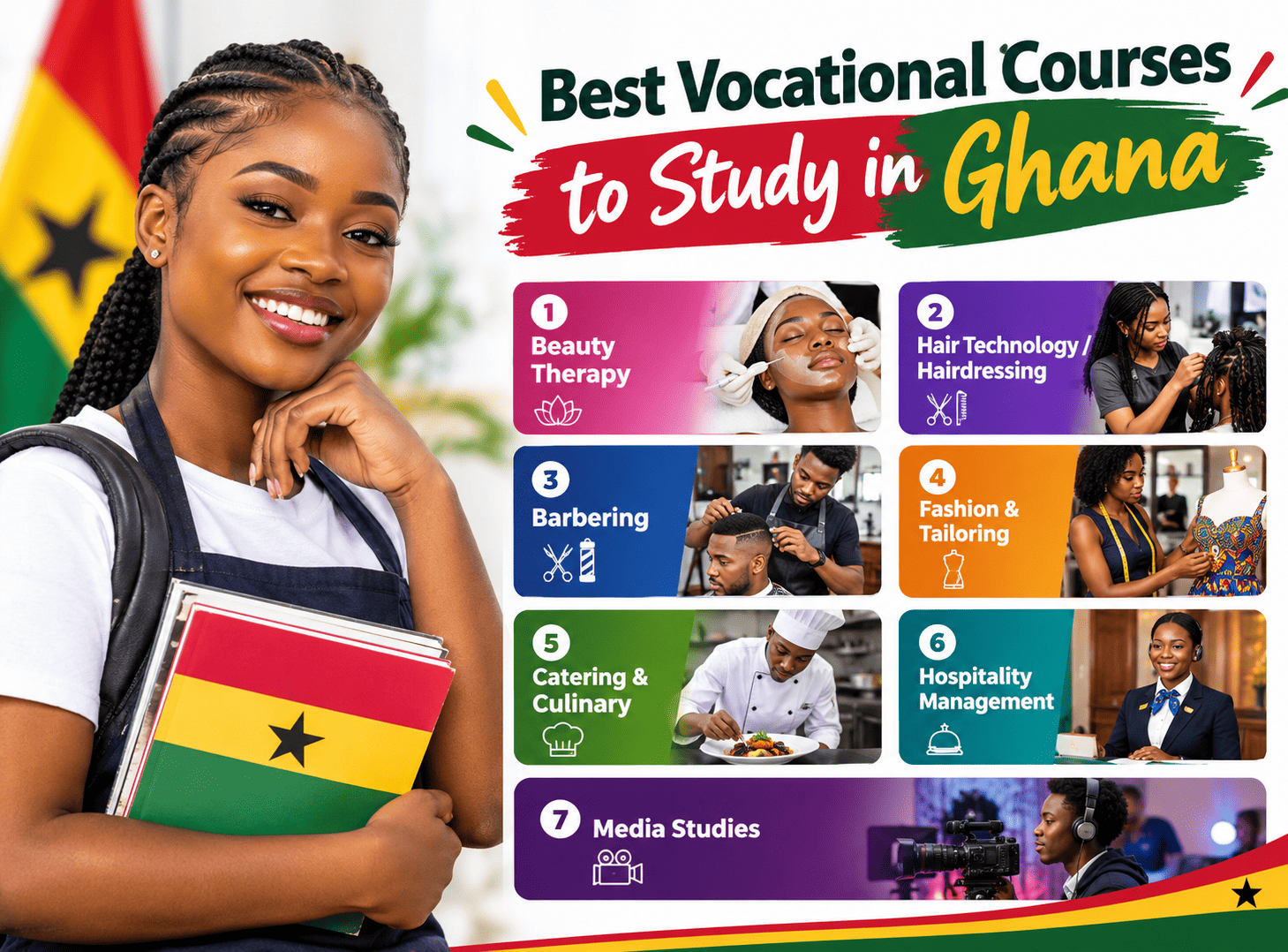
Top Vocational Courses to Study in Ghana
1. Fashion Design and Tailoring
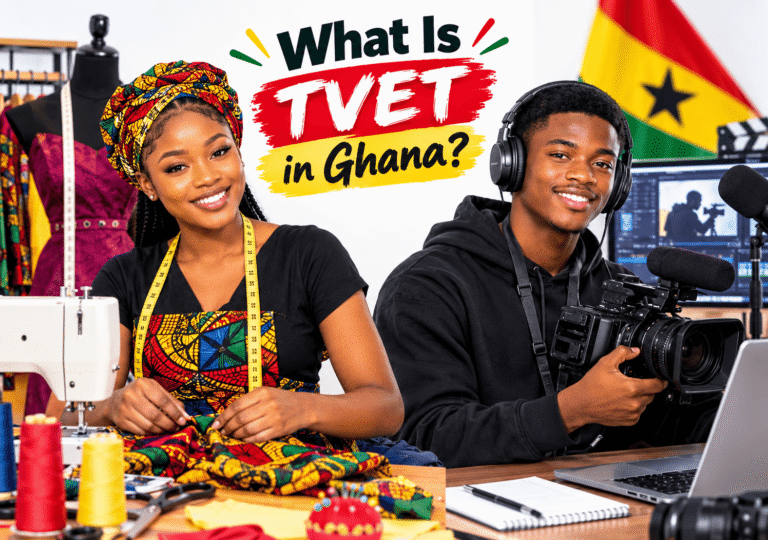
Fashion remains one of the most reliable practical courses in Ghana. Training typically covers pattern-making, cutting, sewing, garment construction and finishing techniques. Courses like Dress Designing and Men’s Tailoring teach students to produce garments from scratch, an especially useful skill given Ghana’s strong culture of custom-made and made-to-order clothing. Graduates often move into bridal wear, corporate uniforms, or general tailoring businesses.
2. Beauty Therapy
Beauty Therapy covers skin care, facial treatments, nail care and body therapy techniques. It’s one of the more flexible vocational skills in Ghana to learn, since it can support both salon employment and home-based or mobile beauty businesses. As personal care spending continues to grow, especially in urban centres, demand for well-trained beauty therapists has grown alongside it.
3. Hair Technology and Barbering
Hairstyling and barbering are consistently among the most practical and profitable skills to learn. Hair Technology focuses on styling, hair care and advanced treatment techniques, while Barbering focuses specifically on men’s grooming. Both are courses with a fast route to income, since many students start earning while still in training by serving family, friends and walk-in clients.
4. Catering
Catering is one of the most versatile vocational courses to study, opening doors to restaurant work, event catering, private chef services, or a home-based food business. Training generally covers food preparation, menu planning, presentation and kitchen hygiene standards, all skills that translate directly into paid work.
5. Hospitality Management
For students drawn to guest-facing roles, Hospitality Management covers the operational side of hotels, guesthouses, restaurants and event centres, including customer service, front-office operations and hospitality standards. As Ghana’s tourism and hospitality sector continues to expand, this remains a strong choice for long-term employment.
6. Media Studies
Media Studies is a good fit for students interested in content creation, broadcasting or communications. As Ghana’s creative and digital media industry grows, this course provides a practical foundation for careers in production, presentation or media-related entrepreneurship.
Where to Learn These Vocational Courses in Ghana
Once you’ve identified a skill that interests you, the next step is finding a training provider that offers genuine hands-on instruction and recognised certification. Abrantie College, based in Accra, is one of the leading institutions offering vocational training courses Ghana students can trust, with over 10,000 practitioners trained since it was founded in November 2007.
Abrantie brings several of the courses discussed above under one roof, including:
- Men’s Tailoring
- Dress Designing
- Beauty Therapy
- Hair Technology
- Barbering
- Catering
- Hospitality Management
- Media Studies
All courses are delivered using Competency-Based Training (CBT), meaning students spend most of their time practising the actual skill under experienced facilitators rather than sitting through theory-only lessons. This hands-on structure is particularly valuable for vocational skills in Ghana that depend on repetition and technique, such as tailoring, hairstyling and catering.
Abrantie College is accredited by the Ghana Education Service (GES), National Vocational Training Institute (NVTI), Ghana TVET Service (GTVETS), Technical Exams Unit (TEU) and C-TVET, and holds professional affiliations with several industry bodies, giving graduates certificates that are recognised in the field. The college also runs a weekend school, so students who work or attend other classes during the week can still complete a full, accredited programme.
Combining Courses for Broader Skills
Many students choose to combine related courses to widen their career options. For example, a student who studies both Dress Designing and Beauty Therapy can offer a fuller range of services to bridal clients. Similarly, pairing Catering with Hospitality Management can prepare a student for both kitchen work and front-of-house hotel or event management roles. When comparing vocational courses in Ghana, it’s worth asking whether a school allows this kind of combined or sequential study.
Tips for Getting the Most Out of Your Training
- Attend consistently. Vocational skills are built through repetition, so regular attendance matters more than it might in a lecture-based course.
- Practise outside class. Where possible, practise on family or friends, or take on small personal projects to reinforce what you’ve learned.
- Ask about certification early. Confirm which body accredits your certificate before you enrol, so you know it will be recognised by employers.
- Look for practical exposure. Some schools offer student outreach or real-client experience before graduation, which builds both skill and confidence.
Final Thoughts
Ghana’s job market rewards people who can do, not just people who know. Whether you’re drawn to fashion, beauty, catering, hospitality or media, there is a strong vocational path available to you. The best vocational courses in Ghana combine practical, hands-on teaching with recognised accreditation, and Abrantie College’s range of courses, campuses and flexible scheduling make it a solid starting point for anyone ready to build a real, marketable skill. Reach out to Abrantie’s admissions team to find the course that matches your goals and get started on your training.